
Strap End
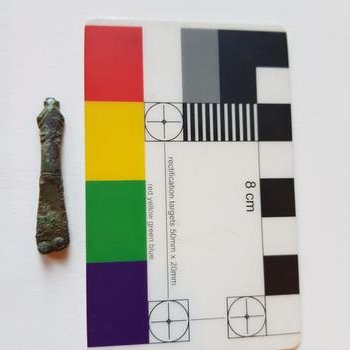
A strap end is a metal fitting attached to the free end of a belt or strap. It’s one of the most common small metal finds from the Anglo-Saxon, Viking and medieval periods.
- Purpose: it stopped the leather or textile end from fraying, added a little weight so the strap hung neatly, and was decorative.
- Construction: usually cast copper alloy, sometimes silver or, rarely, gold. The top end is often split or made of two plates, so the strap could slot in and be fixed with small rivets. Rivet holes are often still visible.
- Shape: typically long and tongue-shaped, narrowing to a rounded or pointed tip. Many Anglo-Saxon examples end in a stylised animal head.
- Decoration: varies by period. Examples include 9th-century Anglo-Saxon Trewhiddle-style animal ornament (often silver with black niello inlay), Viking-age Borre or Ringerike styles, and later medieval foliage, lettering or simple incised lines.
- Archaeological value: shape and decorative style change clearly over time, so strap ends can be dated fairly closely. They also hint at dress, wealth and status.