
Samian Pottery
Also called: Samian
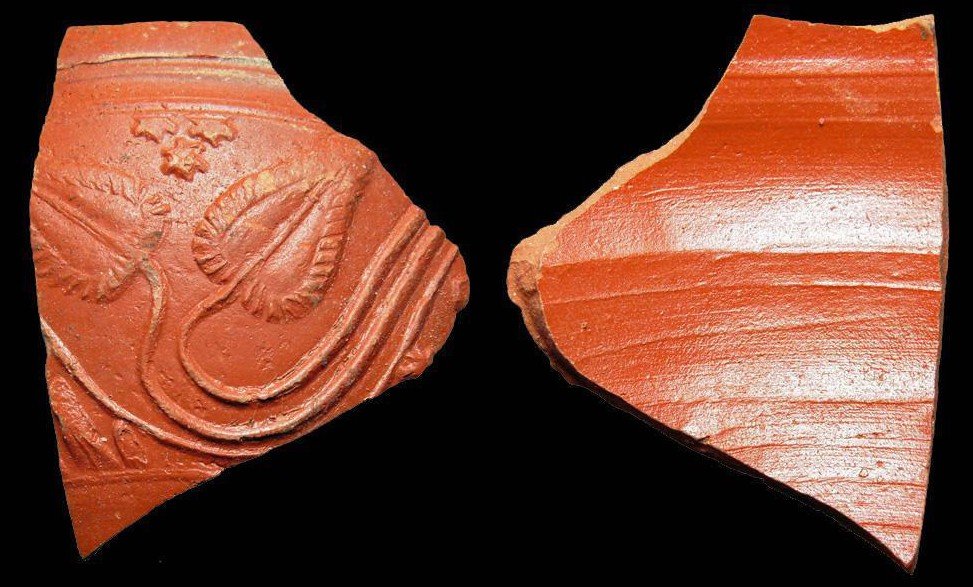
Samian ware (terra sigillata) was the best-quality Roman tableware, and it’s the most common fine pottery found in Roman Britain.
- Where it was made: mostly in southern, central and eastern Gaul (France). A short-lived British industry at Colchester made poorer-quality, unpopular pieces.
- Dates: mostly the 1st and 2nd centuries AD. East Gaulish workshops kept going into the 3rd century.
- Distribution: found across Britain, including sites beyond the province’s northern frontier.
- Appearance: hard and fine, with a glossy red surface. The gloss comes from a fine illite-rich clay slip, and the red from iron in the clay during firing. A rarer black version also exists.
- Decoration and forms: some plain, some decorated with animals, gods, gladiators, mythical beasts and plant designs. It came in many standard shapes (“forms”), including bowls, dishes and cups.
Finds that mention this
- Find 2438 Pottery Assorted Pot Sherds